
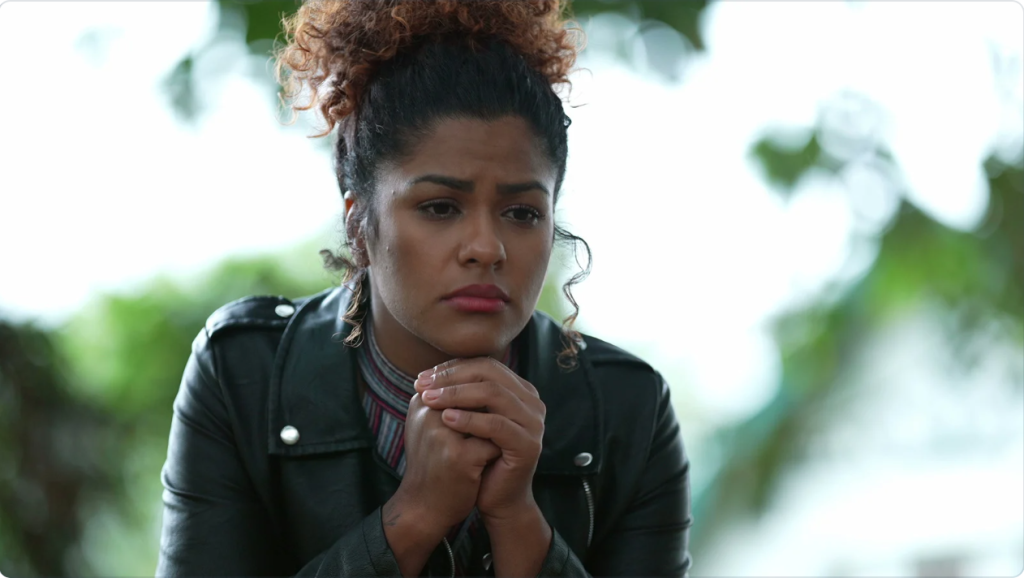
I was reading the AP News recently and came across an article called: Why The Search For Meaning Can Cause ‘Purpose Anxiety,’ And What To Do About It. I had never heard of the term before, but according to the author of this article, Alina Tugend, “The term ‘purpose anxiety’ appears to have been coined in 2014 by a University of Pennsylvania graduate student, Larissa Rainey.” She goes on to say, “Research has shown that people who more strongly feel a sense of purpose tend to be physically and mentally healthier. But the word has become so weighty that finding a purpose has, for many, become a source of angst.”
Whoah.
Because part of my mission is helping women to clarify their purpose so they can experience more fulfillment and meaning in their workplace, home, and communities, this term intrigued me. If there are, indeed, some individuals who get stressed out by being encouraged to find or walk in their purpose, then I want to do my part in helping to dial down that anxiety by presenting a more simplistic and easy-to-understand approach.
Now, it will still take some time and introspection to clarify your purpose, but it will not require exhausting external research that leaves you experimenting with different jobs, places to volunteer, or testing out the right family/friend dynamic to define your purpose.
If this is what people are doing, no wonder “purpose anxiety” is a thing!!
Tugend did an excellent job of sharing the different perspectives surrounding finding our purpose. I’ve taken three perspectives mentioned in the article, summarized them, and responded to them as follows:
“Purpose Anxiety” Happens When You Search in The Wrong Places
Perspective #1:
The constant pressure to “find your purpose” can lead to “purpose anxiety,” a feeling of unease and burden rather than inspiration, despite research suggesting benefits of a sense of purpose.
My response:
Finding your purpose can cause anxiety if you’re searching for it in all the wrong places; outside of who you are. However, because your purpose is a part of who you are and what you were designed to do, your search for it can become an exciting journey of self-discovery that brings you into a place of emotional peace, where the purpose is more meaningful, fulfilling, and joyful than you ever thought possible.
Instead of the stress that is generated when you use a career, volunteer work, family dynamics, etc. to define your purpose, your purpose becomes a filter you can use to determine your direction and make decisions that fit your identity, gifts, passions and circumstances, that will guide you to places where you can operate most effectively and with greater success.
We may not share the same beliefs, but as you read on, consider how your life and choices would be impacted if we did. As humans, we are designed by a creator who not only gives us each a unique identity, but who also places in us a way to utilize that identity and specific skill-sets to uniquely carry out our purpose. That purpose is not just what we do, but it comes forth from who we are. So, instead of looking for a job, hobby, friend, or a family group to find our purpose, I advise us to turn the magnifying glass inward, to study our own unique design:
Who…
- were we before the expectations of others tainted it?
- were we before our innocence was stolen by the “bully on the block?’
- were we before we breathed in all of the cultural demands convincing us of what and who we should be?
What…
- are we most passionate about?
- are we most gifted to do?
- gives us the most joy and fulfilment?
- and where do our passions, giftedness, and fulfillment intersect?
In considering the “who” and the “what,” we can begin to narrow down our purpose. And when we do, we will find that living out our purpose can positively impact our home, workplace, and community.
Our Purpose Encompasses All Aspects Of Life
Perspective #2:
The definition of purpose is flexible and doesn’t necessarily have to be a grand, overarching goal or involve service to others; it could involve hobbies, and volunteering
My Response:
Purpose does not have to be either an overarching grand goal, involve service to others, hobbies, and volunteer, but because our innate purpose involves each of us positively impacting the world around us in our own unique ways, our purpose can encompass all of the above. Our purpose is more like a template by which we operate, or a filter with which we determine what opportunities or projects are the best fit.
It’s a template that communicates statements including, “I know who I am, I know what I am passionate about, and I know the types of things I can do that can have the greatest impact.” Of course, this doesn’t mean you can never step outside of that template to try something new. But often we will find that it’s in that sweet spot of our purpose that we experience the greatest fulfillment, satisfaction, and impact.
It’s important to look at our purpose as a holistic part of our lives. Here is my purpose, and here is what it looks like at my job, in my home, my community, and amongst my friends. Knowing your purpose gives you the ability to know the value you add to each space you enter, which makes for a more confident, more grounded, and more impactful you.
Using my voice to encourage people is a large part of my purpose. When I look back on my own life, no matter how hard that season of life was for me, I found myself encouraging those who needed an extra boost. That voice of support was sometimes stifled by my own pain, so I wasn’t always emotionally healthy enough to walk in my purpose, but when I was, I enjoyed seeing the results of those I championed.
There were times when individuals would come up to me, remembering a conversation we had in previous years, that inspired them to do something that they never thought they could do. I had no idea I was encouraging them to such a degree. So, before I even knew encouraging and helping others to reach their potential was my purpose, I was already operating in it. You may be unknowingly operating in your purpose as well, as you allow your true self to positively impact the lives of others.
Trauma doesn’t change our purpose, it directs our purpose.
Perspective #3
Sometimes a traumatic event can change or create one’s purpose in life.
My Response:
Our purpose is a permanent part of who we are, and just as we can see our purpose carried out in different areas of life, we will also see our purpose carried out in different seasons of life. It just may look different or present itself in new ways.
Trauma doesn’t change our purpose; it directs our purpose.
When it comes to someone creating a nonprofit or movement out of their own pain, that pain doesn’t change or create their purpose; their purpose serves as the motivation behind their actions. For example, I started an outreach for single moms in conjunction with the NBA All-Star Weekend just a few months after my mom passed away. One could say that being raised by a single mom and losing that mom to cancer created my purpose. But the reality is that this emotional event was a catalyst that led to me carrying out my purpose in a particular way. This annual event is not my purpose. My purpose is to use my voice to encourage others to reach their potential. Losing my mom and wanting to honor her in some way is what led me to use my purpose to positively impact single moms. When our purpose drives our actions, we have a greater impact on the world around us in every season of our lives.
Conclusion
“Purpose Anxiety” happens when we search for purpose outside of who we are. Done the right way, exploring your purpose can be an exciting time of joyful discovery that produces peace and opens up a path to fulfillment.